Ahmed Hulusi Website

4/3/16

Brain scan may reveal if you are a true altruist or driven by self-interest

The reason why we help others at a cost to ourselves has long presented a puzzle for scientists. Why do some of us do it more than others? And are we doing it because we are truly moved by the suffering of others or simply because we feel we ought to return a favour or even get something in return? Looking at behaviour alone, it can be hard to tell. Both empathy and the principle of reciprocity - giving to return a favour or expecting others to do so - are proposed explanations for altruism which have been impossible to separate until now.

Using functional magnetic resonance imaging (fMRI), which measures blood flow changes in the brain, a new study suggests that specific differences in connectivity between brain regions can predict whether someone is an empathy-driven altruist, a reciprocity-driven altruist - or just selfish.

In the experiment, 34 female participants were divided into two groups. Those in the "empathy" group witnessed an actor receive painful electric shocks - and received shocks themselves (so they knew it hurt). In the "reciprocity" group, participants were paired up with actors who kindly paid money so the participant received fewer shocks (although both groups received the same number of shocks overall). 

Next, their brains were scanned. During the scanning, participants were asked to split a sum of money between themselves and another person. For the empathy group, the other person receiving the money was sometimes the partner they saw shocked. In the reciprocity group, the person was sometimes the partner who paid for the participant to receive fewer shocks. At other times, participants were simply asked to split the cash between themselves and a neutral person who neither received shocks nor did anything nice. The researchers could therefore divide the participants into those empathy-driven altruists and reciprocity-driven altruists based on the first part of the experiment. They could also use the way participants split the money in the second part to identify selfish individuals among these participants.

Unsurprisingly, the initial analysis showed that participants gave, on average, larger sums of money to the empathy and reciprocity partners than to the neutral partner - and that both groups were equally generous. Those that most regularly chose splits involving more money for themselves than the other were classified as "selfish". But this was just the starting point. The researchers used a complex and sophisticated follow-up to gain deeper insight. 

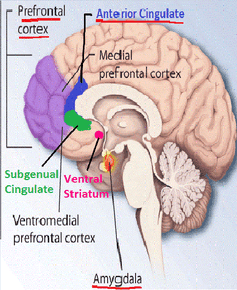
 By looking at the timing of activity in the anterior cingulate cortex (known for a host of functions from pain and conflict to learning), the anterior insula cortex (associated with arousal and emotion) and the ventral striatum (associated with rewards and learning), the researchers created models of how information was passed between these areas. Then a computer algorithm tried to guess, based on these models, whether an individual's altruistic decision had been motivated by empathy or by reciprocity. The high accuracy of these guesses at 77% shows the two groups of participants had brain activity patterns that differed enough to classify.

In empathy-driven altruism, the anterior insula (emotion and arousal) and ventral striatum (rewards) showed a lower than average connectivity, while reciprocity-driven altruism showed increased connectivity between these regions. Connectivity in this sense can be imagined as how much one area is "talking to" another. Although the functions of these areas are broadly known, the meaning of changes in connectivity is still difficult to interpret. 

By looking at the timing of activity in the anterior cingulate cortex (known for a host of functions from pain and conflict to learning), the anterior insula cortex (associated with arousal and emotion) and the ventral striatum (associated with rewards and learning), the researchers created models of how information was passed between these areas. Then a computer algorithm tried to guess, based on these models, whether an individual's altruistic decision had been motivated by empathy or by reciprocity. The high accuracy of these guesses at 77% shows the two groups of participants had brain activity patterns that differed enough to classify.

In empathy-driven altruism, the anterior insula (emotion and arousal) and ventral striatum (rewards) showed a lower than average connectivity, while reciprocity-driven altruism showed increased connectivity between these regions. Connectivity in this sense can be imagined as how much one area is "talking to" another. Although the functions of these areas are broadly known, the meaning of changes in connectivity is still difficult to interpret.


The results also showed differences in brains of those who had been classified as selfish or altruistic based on their decisions. Selfish individuals showed lower than average connectivity from the anterior cingulate cortex to the anterior insula whereas altruists had increased connectivity between these regions.


Can we learn to be more altruistic?

When it comes to implications, the differences between primarily selfish or primarily altruistic participants may be the most important finding. Inducing empathy, by seeing someone shocked, increased giving and associated neural connectivity for selfish individuals - they were more generous to the shocked partners than to the neutral person. The altruistic people, however, shared just as much with the neutral person as the shocked partner. The opposite was true for the reciprocity effect: increased giving to the partner who paid to prevent their shocks was seen in altruistic but not selfish participants.

One could speculate that this implies that altruistic participants are already giving because of empathic motivation, so increasing empathy makes no difference - they are at their "empathy capacity". Similarly, selfish participants may already be acting due to motivations more likely to benefit themselves too, such as reciprocity.

Research on altruism regularly concludes that people have an empathetic motivation but this paper suggests potential for future studies to check whether this is the case for each individual participant. The authors also open doors to more specific measures and targets for further research on reciprocity and empathy.
The paper shows the importance of analysing subtle differences in brain communication rather than overall activity. Looking at different brain regions working together, rather than in isolation, can identify previously elusive psychological concepts, such as underlying motivations.

Future research is needed on whether these increases in altruism and neural connectivity could last, perhaps with ongoing training. For example, if the techniques used to induce empathy in the study could be employed in some sort of treatment for antisocial behaviour.

However, charities can already make the most of the current findings. They suggest empathy-inducing appeals may be most effective for new supporters, who are not yet "altruistic enough" to donate. Existing supporters, who are already altruistic, may respond more to receiving a token gift they feel they can reciprocate by increasing their donations. The effectiveness of these techniques, already used by many charities, may be explained by the findings. But with limited resources, new insight into cognitive processes that might be harnessed by appeals could help society be a bit more generous. 
http://www.sott.net/article/313772-Brain-scan-may-reveal-if-you-are-a-true-altruist-or-driven-by-self-interest

3/22/16

Is complaining negatively altering your brain?

Listening to someone complain, even if it's yourself, has never done anyone any good. Some people say that it may act as a catharsis, a way to let go of negative emotions and experiences, and maybe letting it all out once in a while does feel good, but taking a closer look at what complaining actually does to the brain gives us even more cause to strive for a positive frame of mind and cut out the complaining.
"Synapses That Fire Together Wire Together"

The brain is a complex physical organ that somehow works in tandem with consciousness to create the personality of a human being, always learning, always re-creating and re-generating itself. It is both the product of reality and the creator of reality, and science is finally beginning to under stand how the brain actually creates reality.

Author, computer scientist and philosopher, Steven Parton, examined the ways in which negative emotions in the form of complaining, both expressed by the self and experienced from others, affect the brain and body, coming up with a number of keen observations that help us to understand why some people can't seem to get out of a negative mood.

His theory suggests that negativity and complaining actually physically alters the structure and function of the mind and body.

"Synapses that fire together wire together," says Parton, which is a concise way of understanding the essence of neuroplasticity, the science of how the brain re-wires itself based on whatever it is repetitively exposed to. Negativity and complaining breeds more of the same, as this theory points out.

Parton explains further:

"The principle is simple: Throughout your brain there is a collection of synapses separated by empty space called the synaptic cleft. Whenever you have a thought, one synapse shoots a chemical across the cleft to another synapse, thus building a bridge over which an electric signal can cross, carrying along its charge the relevant information you're thinking about.

...Every time this electrical charge is triggered, the synapses grow closer together in order to decrease the distance the electrical charge has to cross.... The brain is rewiring its own circuitry, physically changing itself, to make it easier and more likely that the proper synapses will share the chemical link and thus spark together - in essence, making it easier for the thought to trigger."
Furthermore, his understanding of this process includes the idea that the electrical connections most utilized by the brain will become shorter, and therefore more frequently chosen for use by the brain. This is how one's personality is altered.

However, as conscious beings, we have the power to affect this process, simply by being aware of how the universal play of duality is at work in the nascent moments of thoughts. We have the power to choose to generate thoughts from the consciousness of love, over fear, thereby ensuring that the brain and personality are positively altered.

Empathy and the Mob Effect

There is more to this action than just the effect that complaining has on the self. This line of scientific reasoning extends to the dynamics between two-people, giving scientific understanding of how one's complaining brings other people down.

Mirror-neurons ensure that we learn from our environment, and are the essential bio-chemical element of empathy. The brain relates to what another person is expressing, and the empathic portion of ourselves responds by 'trying on' this emotion as an attempt to relate to and understand the externally unfolding drama.

So, when a person enters and drops a huge boatload of gossip, negativity and drama on you, you can be assured that it is affecting you bio-chemically, and is decreasing your chances of actually being happy. Exposure to this kind of emotional outburst actually causes stress, and because stress kills, complaining and negativity may seriously be contributing to your early demise.

Parton refers to this outlook as 'the science of happiness,' and the example of the behavior of complaining does make a fitting case study for the connection between the power of thought and the amount of control a person can exert on the creation of our shared, three-dimensional reality.

The overall view of this is even further condensed, rather precisely, by Parton:
"...if you're always complaining and belittling your own power in reality, you will not think you have the power to change it. And thus it will never change."
 http://www.sott.net/article/313876-Is-complaining-negatively-altering-your-brain

3/11/16

The Faith Gene: Are Human Beings Set Up to Believe in a Higher Power?


Are human beings set up to believe in a higher power? Some scientists say yes, based on either a "faith gene" or certain areas of the brain that light up on an MRI when people pray or think about God. But this is a highly destructive "yes," because it reduces spirituality to a mechanical function like heart rate or the secretion of growth hormone. The same evidence fuels the arguments of atheists, who claim that if God is just a chemical reaction, it's time we quit believing in a deity. At the very least, they say, we should stop glorifying God, now that he (or she) has been demoted far below the exalted status one finds in the Bible and the rest of world scriptures.

I think atheists are getting a lot of mileage out of a facile argument. In 1896, long before brain imaging and the discovery of DNA, the famous Harvard philosopher and psychologist William James published a lecture called "The Will to Believe." It contains one idea that is a revelation. James found a way for science to lead to God instead of defeating God. Let me give the revelation a context. James thought people had a right, perhaps even a drive, to say that God existed, and even though they couldn't offer evidence for their religious beliefs, it sustained them with comfort, hope and so on.

Atheists scoff at this rationale, claiming it's childish to fall back on fairy tales about God just because they make you feel better. Far better to grow up and see what's before your eyes: the material world operating through random chance without the slightest sign of a higher intelligence, moral authority, afterlife and all the other trappings of religion. But James was ahead of this argument.

What, he asked, if believing in God actually makes new evidence appear? That was the revelation, because while believing in ghosts or Cinderella won't make either one appear (so far as we know), God is an aspect of our own consciousness. The deity is continuous with the human mind. When Jesus said, "Seek the kingdom of Heaven within," he was pointing to this very continuity. I am paraphrasing James and to some extent going beyond his lecture. But what fascinates me is that he hit upon a familiar notion among seekers today: "You will only see it if you believe it."


by Deepak Chopra

2/25/16

Consciousness has less control than believed, according to new theory

Consciousness -- the internal dialogue that seems to govern one's thoughts and actions -- is far less powerful than people believe, serving as a passive conduit rather than an active force that exerts control, according to a new theory proposed by an SF State researcher.

Associate Professor of Psychology Ezequiel Morsella's "Passive Frame Theory" suggests that the conscious mind is like an interpreter helping speakers of different languages communicate.

"The interpreter presents the information but is not the one making any arguments or acting upon the knowledge that is shared," Morsella said. "Similarly, the information we perceive in our consciousness is not created by conscious processes, nor is it reacted to by conscious processes. Consciousness is the middle-man, and it doesn't do as much work as you think."

Morsella and his coauthors' groundbreaking theory, published online on June 22 by the journal Behavioral and Brain Sciences, contradicts intuitive beliefs about human consciousness and the notion of self.

Consciousness, per Morsella's theory, is more reflexive and less purposeful than conventional wisdom would dictate. Because the human mind experiences its own consciousness as sifting through urges, thoughts, feelings and physical actions, people understand their consciousness to be in control of these myriad impulses. But in reality, Morsella argues, consciousness does the same simple task over and over, giving the impression that it is doing more than it actually is.

"We have long thought consciousness solved problems and had many moving parts, but it's much more basic and static," Morsella said. "This theory is very counterintuitive. It goes against our everyday way of thinking."

According to Morsella's framework, the "free will" that people typically attribute to their conscious mind -- the idea that our consciousness, as a "decider," guides us to a course of action -- does not exist. Instead, consciousness only relays information to control "voluntary" action, or goal-oriented movement involving the skeletal muscle system.

Compare consciousness to the Internet, Morsella suggested. The Internet can be used to buy books, reserve a hotel room and complete thousands of other tasks. Taken at face value, it would seem incredibly powerful. But, in actuality, a person in front of a laptop or clicking away on a smartphone is running the show -- the Internet is just being made to perform the same basic process, without any free will of its own.

The Passive Frame Theory also defies the intuitive belief that one conscious thought leads to another. "One thought doesn't know about the other, they just often have access to and are acting upon the same, unconscious information," Morsella said. "You have one thought and then another, and you think that one thought leads to the next, but this doesn't seem to be the way the process actually works."The theory, which took Morsella and his team more than 10 years to develop, can be difficult to accept at first, he said.
"The number one reason it's taken so long to reach this conclusion is because people confuse what consciousness is for with what they think they use it for," Morsella said. "Also, most approaches to consciousness focus on perception rather than action."

The theory has major implications for the study of mental disorders, Morsella said. "Why do you have an urge or thought that you shouldn't be having? Because, in a sense, the consciousness system doesn't know that you shouldn't be thinking about something," Morsella said. "An urge generator doesn't know that an urge is irrelevant to other thoughts or ongoing action."
The study of consciousness is complicated, Morsella added, because of the inherent difficulty of applying the conscious mind to study itself.

"For the vast majority of human history, we were hunting and gathering and had more pressing concerns that required rapidly executed voluntary actions," Morsella said. "Consciousness seems to have evolved for these types of actions rather than to understand itself."

 https://www.sciencedaily.com/releases/2015/06/150623141911.htm

2/12/16

Smoking effects on the body

Smoking in considered the largest preventable cause of death worldwide. Every day we are attacked with the side effects of smoking, but it does not seem to convince smokers that smoking truly is the worst thing for their health. To round up, regular smoking cuts half an hour of your life with every two cigarettes. On average smokers die 10 years earlier than non-smokers.
Here is a list of the effects of smoking:
  • CANCER
Lung cancer develops in 95% of patients with a positive history of smoking. Smoking is also associated with other cancers such as bladder cancer, kidney cancer, throat cancer, mouth cancer, esophagus cancer, pancreatic cancer, stomach cancer, cervical cancer, bowel cancer, ovarian cancer, cancer of the nose and sinuses and some forms of leukemia.
There are over 4,000 compounds in a cigarette smoke. A large number of them are toxic and harm our cells; some of them are carcinogenic meaning that they cause cancer.
Cigarette smoke primarily consists of:
Nicotine: this is not the carcinogenic compound, but it is responsible for the addictiveness of smoking. Nicotine acts very fast, it reaches the neurons in 15 seconds after being inhaled. If there were no nicotine in cigarettes the number of smokers wouldn’t be this concerning and the tobacco industry would surely fail.
Nicotine exposure leads to depression of the nervous system, growth retardation and in pregnancy to improper fetal development.
Carbon Monoxide: it is a tasteless and poisonous gas. It is highly soluble in blood and interacts easily with hemoglobin. If there is enough carbon monoxide in the air inhaling it will cause fatigue, weakness, dizziness, decreased muscle and heart function and gradually coma and death.
Tar from the inhaled cigarette smoke 70% of the tar remains in the lugs. It is a harmful chemical residue that coats everything with a brownish-yellow film. The tar in cigarette smoke harms the cilia predisposing to many diseases such as emphysema, chronic bronchitis and lung cancer.
Nitrosamines: NNN, NAT and NNK are the three compounds unique to tobacco that are known carcinogens.
Other compounds found in cigarette smoking include: cyanide, benzene, formaldehyde, methanol, acetylene, ammonia, cresol, lead and many more.
NERVOUS SYSTEM
The stimulant effect of nicotine only lasts very short, after this effect it leaves you tired and craving for more. Smoking also leads to poor eye sight because it causes macular degeneration and cataracts.
RESPIRATORY SYSTEM
Smoking damages the cilia function, predisposing to infections. It is also related with emphysema, the destruction of air sacs, chronic bronchitis, where the lining of the bronchi get inflamed and the condition called chronic obstructive pulmonary disease.
CARDIOVASCULAR SYSTEM
Smoking is one of the leading causes of atherosclerosis, the accumulation of fatty substances in the lumen of arteries. This condition leads to coronary heart disease predisposing to heart attack.
Smoking also increases blood sugar, causes vasoconstriction, hypertension, raises the risk of forming blood clots and aortic aneurism.
INTEGUMENTARY SYSTEM
Skin involvement by smoking presents with discoloration, wrinkles, and premature aging. The presence of tar manifests as a brownish-yellow stain on the nails, fingers and teeth. The bad smell of the cigarette smoke also clings to the hair and skin.
DIGESTIVE SYSTEM
Oral problems are very common in smokers, presenting with gingivitis and periodontists. These conditions lead to tooth decay, tooth loss and of course to bad breath. Smoking can also decrease your appetite predisposing you to malnutrition.
ENDOCRINE SYSTEM
Smoking has harmful effects on insulin function thus increasing the chances of developing type 2 diabetes. Cortisol lowers the effects of nicotine. In high stress situation, when your body produces lots of cortisol you’ll need more nicotine to achieve its desired effects.
REPRODUCTIVE SYSTEM
Smokers have difficulty achieving orgasm, and the vasoconstriction caused by smoking effects the man’s ability to get an erection. Smoking also increases the risk of infertility and causes menopause earlier than expected.
Pregnant women experience more complications such as premature delivery, miscarriage and placental problems.
  http://wespeakscience.com/smoking-effects-on-the-body/

2/4/16

ALCOHOL and the BRAIN

Most of us have witnessed the outward signs of heavy drinking: the stumbling walk, slurred words and memory lapses. People who have been drinking have trouble with their balance, judgment and coordination. They react slowly to stimuli, which is why drinking before driving is so dangerous. All of these physical signs occur because of the way alcohol affects the brain and central nervous system.
Alcohol affects brain chemistry by altering levels of neurotransmitters. Neurotransmitters are chemical messengers that transmit the signals throughout the body that control thought processes, behavior and emotion. Neurotransmitters are either excitatory, meaning that they stimulate brain electrical activity, or inhibitory, meaning that they decrease brain electrical activity. Alcohol increases the effects of the inhibitory neurotransmitter GABA in the brain. GABA causes the sluggish movements and slurred speech that often occur in alcoholics. At the same time, alcohol inhibits the excitatory neurotransmitter glutamate. Suppressing this stimulant results in a similar type of physiological slowdown. In addition to increasing the GABA and decreasing the glutamate in the brain, alcohol increases the amount of the chemical dopamine in the brain's reward center, which creates the feeling of pleasure that occurs when someone takes a drink.

Alcohol affects the different regions of the brain in different ways:
  • Cerebral cortex: In this region, where thought processing and consciousness are centered, alcohol depresses the behavioral inhibitory centers, making the person less inhibited; it slows down the processing of information from the eyes, ears, mouth and other senses; and it inhibits the thought processes, making it difficult to think clearly.
  • Cerebellum: Alcohol affects this center of movement and balance, resulting in the staggering, off-balance swagger we associate with the so-called "falling-down drunk."
  • Hypothalamus and pituitary: The hypothalamus and pituitary coordinate automatic brain functions and hormone release. Alcohol depresses nerve centers in the hypothalamus that control sexual arousal and performance. Although sexual urge may increase, sexual performance decreases.
  • Medulla: This area of the brain handles such automatic functions as breathing, consciousness and body temperature. By acting on the medulla, alcohol induces sleepiness. It can also slow breathing and lower body temperature, which can be life threatening.
In the short term, alcohol can cause blackouts -- short-term memory lapses in which people forget what occurred over entire stretches of time. The long-term effects on the brain can be even more damaging.
http://science.howstuffworks.com/life/inside-the-mind/human-brain/alcoholism4.htm

1/20/16

5 Scientifically Supported Benefits of Prayer

According to a 2013 Pew Research Poll, over half of Americans pray every day. A 2012 poll found that over 75 percent of Americans believe that prayer is an important part of daily life. Other polls indicate that even some atheists and religiously unaffiliated individuals admit that they sometimes pray.
Our species has probably been praying for as long as we have been able to contemplate our existence. And though we may never be able to establish evidence that a deity or spiritual force actually hears our prayers, in recent years, scientists have begun to consider the potential tangible (i.e., measurable) effects of prayer. And this research suggests that prayer may be very beneficial.
So here are five scientifically-supported benefits of prayer:

1. Prayer improves self-control
Studies have demonstrated that self-control is like a muscle. That is, it gets fatigued. You can only do so many push-ups before your muscles give out. Similarly, activities that require self-control are fatiguing, making it more difficult to make good choices the more you have to use your "self-control muscle." Think about it. You are more likely to lose your cool or engage in mindless eating when you are mentally exhausted. 
Recent research indicates that prayer can help you get more out of your "self-control muscle." Research participants who said a prayer prior to a mentally exhausting task were better able to exercise self-control following that task. In addition, other studies demonstrate the prayer reduces alcohol consumption, which may reflect the exercise of self-control. Findings such as these suggest that prayer has an energizing effect.

2. Prayer makes you nicer
Researchers found that having people pray for those in need reduced the amount of aggression they expressed following an anger-inducing experience. In other words, prayer helps you not lose your cool.

3. Prayer makes you more forgiving
Researchers found that having people pray for a romantic partner or friend made them more willing to forgive those individuals.  

4. Prayer increases trust
Recent studies found that having people pray together with a close friend increased feelings of unity and trust. This finding is interesting because it suggests that praying with others can be an experience that brings people closer together. Social prayer may thus help build close relationships.

5. Prayer offsets the negative health effects of stress
Researchers found that people who prayed for others were less vulnerable to the negative physical health effects associated with financial stress. Also, it was the focus on others that seemed to be contributing to the stress-buffering effects of prayer. Praying for material gain did not counter the effects of stress. So thinking about the welfare of others may be a crucial component of receiving personal benefits from prayer.
Scientists and public intellectuals who are critical of religion, focus on what they believe to be the irrationality of religious belief. Why waste time believing in things that have no supporting scientific evidence? These critics typically fail to consider the fact that scientific studies are finding measureable benefits of religious faith. As I have discussed here and here, religion is complicated. It can be both good and bad for your health depending on a number of variables. However, there is a growing body of evidence indicating that prayer, a behavior often associated with religion, can be beneficial for individuals and society.

 https://www.psychologytoday.com/blog/more-mortal/201406/5-scientifically-supported-benefits-prayer